

Commentary
Lessons from other backsliding democracies show that mass mobilization needs to feed into an electoral strategy.
Saskia Brechenmacher, Shreya Joshi
{
  "authors": [
    "Oliver Stuenkel",
    "Adrian Feinberg"
  ],
  "type": "commentary",
  "blog": "Emissary",
  "centerAffiliationAll": "dc",
  "centers": [
    "Carnegie Endowment for International Peace"
  ],
  "englishNewsletterAll": "democracy",
  "nonEnglishNewsletterAll": "",
  "programAffiliation": "DCG",
  "programs": [
    "Democracy, Conflict, and Governance"
  ],
  "regions": [
    "Colombia",
    "United States",
    "South America",
    "Central America and the Caribbean"
  ],
  "topics": [
    "Democracy",
    "Foreign Policy"
  ]
}
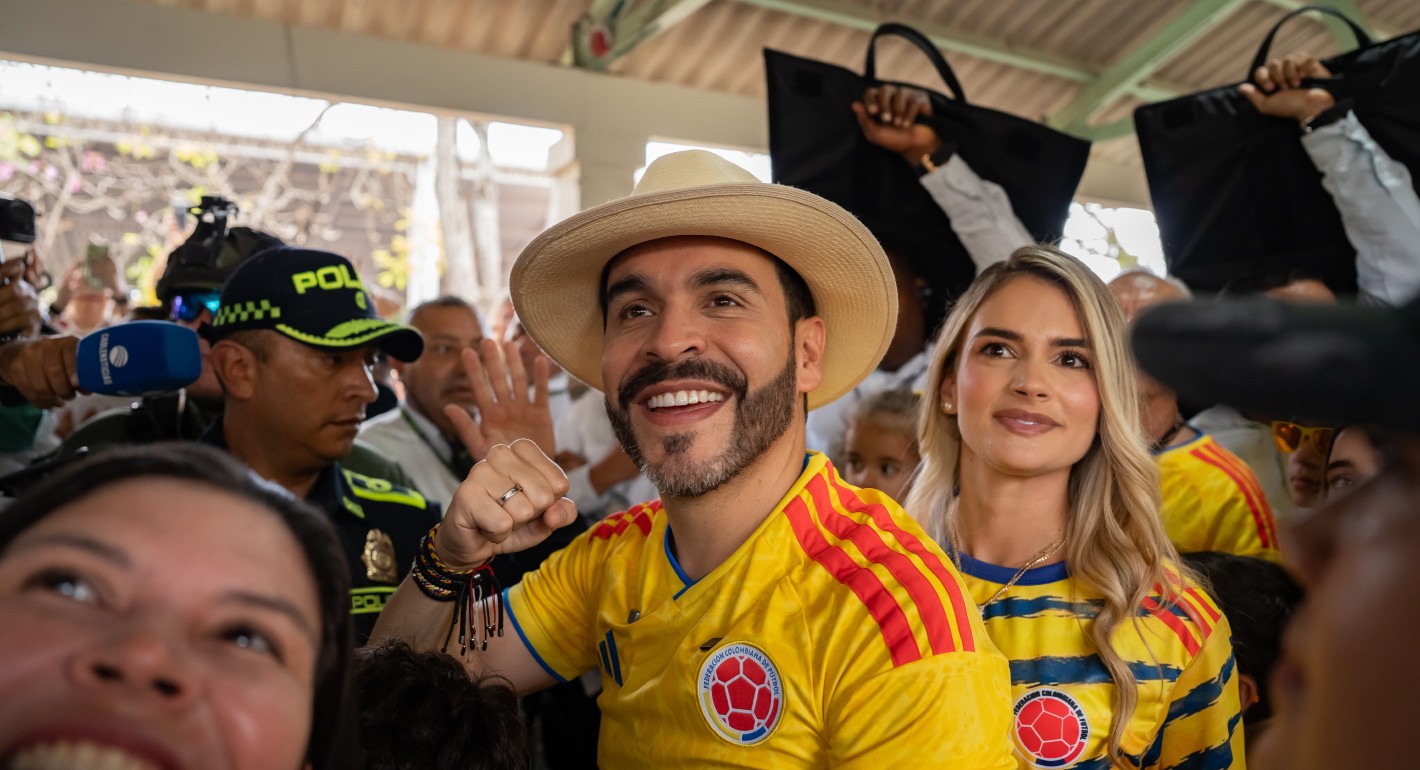
Abelardo de la Espriella on June 21, 2026 in Barranquilla, Colombia. (Photo by Leonardo Castañeda/Getty Images)
In Colombia and elsewhere in the region, the United States is trying to shape election outcomes—but at what cost?
On Sunday, Colombian voters chose far-right lawyer Abelardo de la Espriella over leftist Senator Iván Cepeda in the country’s presidential runoff. The result ends Colombia’s first-ever experiment with leftist rule under outgoing President Gustavo Petro, but de la Espriella represents less a restoration of the country’s conservative establishment and more the arrival of a bombastic new populist right.
Petro endorsed Cepeda as his chosen successor; both are longtime figures of the progressive Pacto Histórico coalition that launched Petro to power four years ago. De la Espriella also enjoyed presidential backing—albeit from farther afield.
On June 2, U.S. President Donald Trump used Truth Social to give de la Espriella his “complete and total endorsement,” promising—or perhaps threatening—that the runoff results would be “very important to the future of Colombia and its relationship to the United States.” Trump’s post came days after de la Espriella won the most votes in the first-round election and followed months of on-again, off-again hostility with the United States and the Petro administration that ultimately saw the Colombian president sanctioned by the U.S. Treasury Department.
Whether Trump’s endorsement pushed de la Espriella over the line is unclear. Colombian voters had plenty of reasons to favor an alternative to Petro. The current government boasts, at best, a mixed record: Landmark achievements on minimum wages, pension coverage, and land redistribution rested uneasily alongside rising crime, a crumbling healthcare system, and the expansion of armed rebel groups. Petro regained his initial 50 percent approval ratings in early 2026 after languishing in the 30 percent range for most of his tenure.
In the election’s immediate wake, with an extremely narrow margin separating the two candidates, Petro made unsubstantiated claims of Israeli cyber interference on de la Espriella’s behalf. On Wednesday, Cepeda conceded defeat and will lead the opposition to the new president, who lacks a congressional majority and will struggle to enact many of his proposals.
None of this will matter to Trump, who has celebrated another win in Latin America’s so-called blue wave (or “orange drift,” as James Bosworth has called it) as his own. The president’s bluster is characteristically self-aggrandizing, but it stems from an unsettling reality: Across Latin America, the administration has largely succeeded in tilting the electoral playing field toward its preferred candidates.
In Argentina, the White House conditioned a $40 billion bailout package on President Javier Milei’s far-right La Libertad Avanza party (LLA) prevailing in the country’s October 2025 midterm elections. That gambit seems to have paid off: LLA dramatically outperformed polling data despite low presidential approval ratings and opposition momentum in Buenos Aires Province.
In Honduras, Trump took the same direct signaling approach later used in Colombia. In the days leading up to the country’s November 2025 presidential election, he launched a Truth Social offensive in favor of conservative real estate magnate Nasry Asfura, which his opponent said helped Asfura claim a razor-thin victory.
These were extraordinary interventions. Sitting U.S. presidents do not typically endorse candidates or coerce voters in foreign elections, especially not for such overtly partisan interests. Nonetheless, Trump has butted into all manner of democratic processes in Latin America. Beyond the elections in Colombia, Argentina, and Honduras, he has wielded tariffs and sanctions to disrupt the trials of right-wing leaders Jair Bolsonaro and Álvaro Uribe, and even undermined a civil society movement challenging President Nayib Bukele’s abuses of power in El Salvador.
Not all of these interventions have worked: Bolsonaro was ultimately convicted, and President Luiz Inácio Lula da Silva’s approval ratings rose in response to Trump’s attack on Brazilian sovereignty. Still, a new model of American power in the Western Hemisphere has emerged—one that is personalistic, episodic, and detached from any coherent regional strategy.
Trump’s interventions make no attempt to lock countries into U.S.-led economic or security architectures. They are transactional gestures, driven by loyalty tests and short-term leverage rather than long-term geopolitical goals, such as breaking ties with China. Unlike in Europe—where Trump’s interventionism is explicitly ideological and rooted in a narrative of civilizational decline—his approach in Latin America is strikingly instrumental. It rewards personal alignment, not policy convergence.
After celebrating Milei’s most recent victory, Trump neglected to pressure Argentina to abandon its Chinese investors, which have only grown in number since Milei took office. This tension was thrown into sharp relief when Milei’s own administration awarded a twenty-five-year contract to upgrade the Paraná River—Argentina’s most critical trade artery—to a venture with long-standing ties to Chinese state-run dredging companies, bypassing a U.S.-backed competitor.
The same dynamic is likely to play out with the region’s other newly elected conservatives. De la Espriella and Peru’s Keiko Fujimori—the latter narrowly elected in early June without an explicit Trump endorsement, though widely viewed as Washington’s preferred candidate—can be expected to deepen cooperation with the United States on organized crime and counter-narcotics, where their domestic political incentives already align with U.S. priorities. Neither, however, is positioned to engineer a structural break with China, which remains Peru’s top trading partner and an increasingly important investor in Colombian infrastructure and critical minerals.
In Honduras, Asfura has signaled total alignment with Washington—reviewing Huawei contracts, attending Trump’s Shield of the Americas summit, and promising an eventual restoration of ties with Taiwan—but has stopped well short of the rupture with Beijing that his campaign promised. Months into his term, the previous government’s agreements with Chinese firms across telecoms, energy, and security remain largely intact.
In the short run, Trump may continue to tilt close races. But the cost is clear. When Washington openly anoints a chosen candidate, the rivals he marginalizes do not disappear—they accumulate resentment. In Honduras, for example, Salvador Nasralla—the candidate who lost to Asfura—has already argued that Trump’s intervention damaged his chances and distorted the race. Given Latin America’s long-standing anti-incumbency dynamic, figures like Nasralla—or politicians aligned with them—are likely to come to power sooner rather than later. That reality makes it far harder to build durable relationships that survive the region’s inevitable political pendulum swings.
In the long run, then, this election-by-election approach risks hollowing out American influence. By replacing institutions with personal favor, Washington signals that its commitments are conditional and fleeting. Allies will learn to perform loyalty rather than align strategically, and adversaries will learn to wait. The paradox of Trump’s Latin American interventionism is that, even when it “works,” it teaches the region that U.S. power is no longer something to rely on.
Understand the world with the latest from our scholars around the world.
Senior Fellow, Democracy, Conflict, and Governance Program
Oliver Stuenkel is an associate professor at the School of International Relations at Fundação Getulio Vargas (FGV) in São Paulo, Brazil. He is also a senior fellow affiliated with the Democracy, Conflict, and Governance Program at the Carnegie Endowment for International Peace.
James C. Gaither Junior Fellow, Democracy, Conflict and Governance Program
Adrian Feinberg is a James C. Gaither Junior Fellow in the Carnegie Democracy, Conflict and Governance Program.
Carnegie does not take institutional positions on public policy issues; the views represented herein are those of the author(s) and do not necessarily reflect the views of Carnegie, its staff, or its trustees.
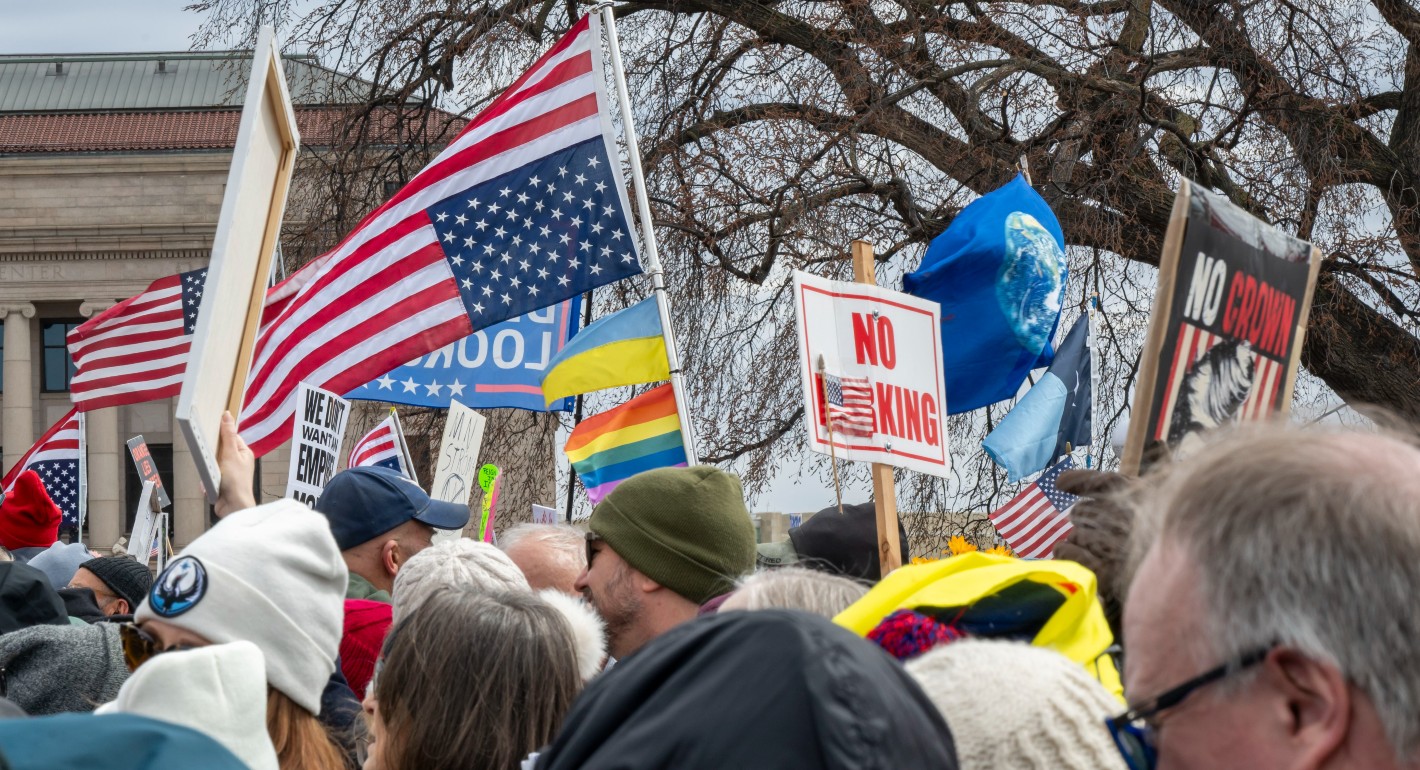
Lessons from other backsliding democracies show that mass mobilization needs to feed into an electoral strategy.

Saskia Brechenmacher, Shreya Joshi
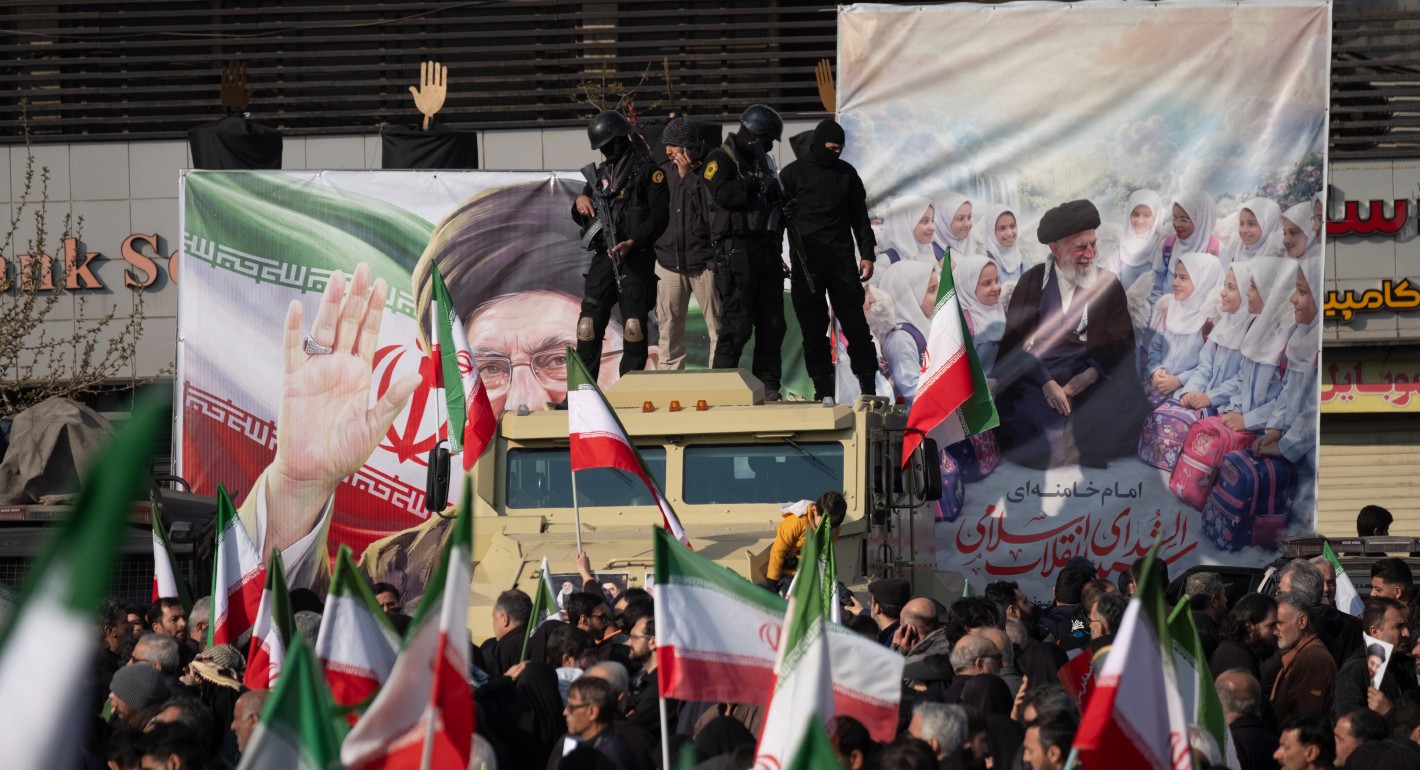
The recent record of citizen uprisings in autocracies spells caution for the hope that a new wave of Iranian protests may break the regime’s hold on power.


Thomas Carothers, McKenzie Carrier

Two experts discuss how drone technology is shaping yet another conflict and what the United States can learn from Ukraine.


Steve Feldstein, Dara Massicot
Venezuelans deserve to participate in collective decisionmaking and determine their own futures.

Jennifer McCoy
From Sudan to Ukraine, UAVs have upended warfighting tactics and become one of the most destructive weapons of conflict.

Jon Bateman, Steve Feldstein